| Species list |
Hybrids list |
Tubers list |
Topics list |
Site index |
What's new |
Home page |
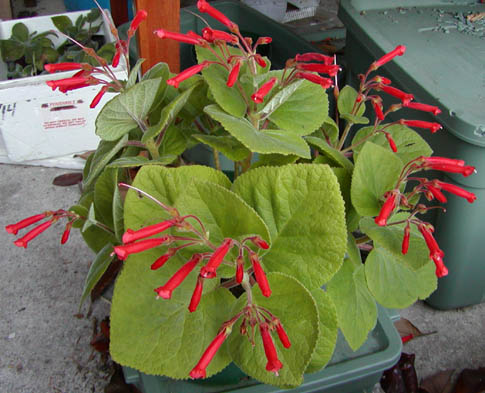
Around 1980, I crossed S. reitzii with several other species. One was S. cardinalis. The result was a plant whose leaves looked more like those of S. lineata than those of either parent, but whose flowers look like those of S. cardinalis without the galea. The flowerstalks have well-defined peduncles, like those of the reitzii parent.
I was obviously not the first one to make this cross, since Perret et al. mention in their paper that Carl Clayberg had obtained fully fertile hybrids from all crosses between a group of species in the Dircaea clade, and this group included both S. cardinalis and S. reitzii.
I must admit I have some reservations about the identification of this plant. All the other hybrids I have made with S. reitzii and S. "Black Hill" have leaves which are at least somewhat dark green; none of the others have the bright cardinalis-type green that this one has.
Another source of doubt is the determinate growth. I have two three-species hybrids whose ancestry is 1/4 indeterminate and 3/4 determinate, yet are indeterminate, suggesting that the indeterminate habit is very dominant. This plant has one indeterminate parent (S. reitzii) and one determinate parent (S. cardinalis), yet is determinate. That makes me wonder.
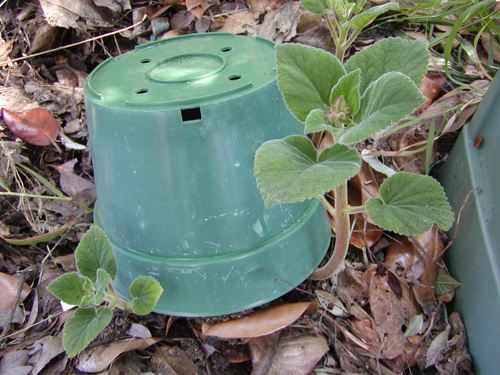
Yet another point: most S. reitzii hybrids retain at least a stub of the stem on the tuber when they go dormant. This plant does not. The deciduous stems separate cleanly from the tuber.
The cross was done so long ago that I have no way of assessing how accurate I was about identifying it. I don't even know which species was the seed parent (although it is pretty clear that this plant has S. cardinalis in its ancestry). If the second parent isn't S. reitzii, it would have to be something with peduncles -- perhaps S. lineata. Obviously, I'm going to have to repeat the cross.
My misgivings about its heredity notwithstanding, this is an excellent plant. It blooms heavily and has a much tidier growth habit than S. cardinalis, despite being quite a bit larger. One of these days, I will get my act together and propagate this thing.
In 2008, I crossed this guy with a couple of things, including S. iarae. We are still waiting to find out how those plants turn out -- none has bloomed yet.
| Plant Description |
|
| Growth | Determinate |
| Habit | Upright, spreading stem(s) |
| Dormancy | Dormancy is obligate. Stems are completely deciduous |
Flowering |
|
| Inflorescence | terminal peduncles (usually two per stem) |
| Season | Blooms in spring |
| Flower | Red, tubular, no galea |
Horticultural aspects |
|
| Hardiness | Has survived 25F (-4C) in my yard |
Hybridization |
|
| Hybridizer | Alan LaVergne |
| Fertility | This hybrid is fertile. |
Botany |
|
| Taxonomic group | Both parents belong to the Dircaea clade. |
| Nectaries | Five, separate except for the dorsal pair, which are larger than the others and fused. |